Download Center
 Video Center
 (86)0411-87625211
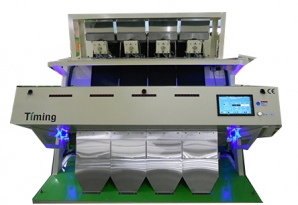
Coarse Grain Color Sorter: The "Piercing Eyes" Protecting Food Security, Reducing Loss and Waste at the Source
Food loss is one of the severe challenges facing global food security. According to FAO data, approximately 1.3 billion tons of food are lost or wasted globally each year, with post-harvest losses (from harvest to consumption) accounting for as much as 30%. In China, coarse grains serve as an important dietary supplement. Inefficiencies and errors in the post-harvest sorting process often lead to large quantities of good grain being mistakenly discarded, or secondary losses such as mold and insect infestation caused by residual impurities. The coarse grain color sorter, as a core piece of equipment in modern grain processing, is reducing grain loss and waste from multiple dimensions through precise and efficient technological means, becoming the "piercing eyes" that safeguard food security.
I. Precise Identification: Reducing Misjudgment Losses, Ensuring No Good Grain Goes to Waste
Traditional coarse grain sorting relies on manual labor or simple mechanical screening, which cannot distinguish subtle quality differences. For example, when manually sorting moldy kernels, visual fatigue or lack of experience often leads to normal kernels being mistakenly discarded as defective, or moldy kernels being missed, causing the entire batch's quality to decline. Coarse grain color sorters, equipped with high-resolution CCD cameras and AI image recognition algorithms, capture multi-dimensional information including color, shape, and texture. They accurately identify moldy kernels, insect-damaged kernels, imperfect kernels, and impurities (such as stones and weed seeds), achieving sorting accuracy of over 99.9%.
Taking millet as an example: millet kernels contaminated with aflatoxin are slightly darker in color and have mold spots, making them difficult for the human eye to distinguish. However, a color sorter can quickly separate them using preset color thresholds, preventing toxic grain from entering the market while avoiding the mis-sorting of normal millet. According to calculations, after using a color sorter, the misjudgment loss rate for coarse grains can be reduced from 5-8% with manual sorting to below 0.5%. For every 100 tons of coarse grain processed, 4.5-7.5 tons of good grain are saved from being wasted.
II. High Efficiency: Reducing Process Losses and Preventing Deterioration from Accumulation
If coarse grains cannot be sorted promptly after harvest, they are prone to mold or sprouting due to moisture and high temperatures, causing irreversible losses. Manual sorting is inefficient (one person can only process 1-2 tons per day) and cannot meet the demands of large-scale procurement. Color sorters, on the other hand, can process 10-50 tons per hour and operate 24 hours continuously, completing the sorting process quickly and reducing the time grain spends in intermediate stages.
For example, in major coarse grain producing regions, grain is brought to market intensively during the autumn harvest season. If manual sorting is used, large quantities of grain accumulate in warehouses and may become moldy within just 3-5 days due to poor ventilation. Color sorters can complete the sorting process in a short time, allowing clean coarse grains to be promptly stored in warehouses, avoiding deterioration losses caused by accumulation. Data from a grain enterprise shows that after adopting color sorters, its post-harvest accumulation loss rate dropped from 10% to 2%, saving over 1,000 tons of grain annually.
III. Graded Utilization: Reducing Value Losses, Achieving Full Resource Utilization
Quality differences in coarse grains directly affect their market value. Traditional sorting methods cannot achieve fine grading, resulting in high-quality and low-quality coarse grains being mixed together, lowering overall prices, or even causing entire batches to be discarded because the low-quality portion cannot be sold. Color sorters can classify coarse grains into multiple grades based on indicators such as plumpness, color uniformity, and size:
• High-grade coarse grains (plump, impurity-free) can be sold directly as premium ingredients, with prices increasing by 20-30%;
• Medium-grade coarse grains can be used for processing products such as soy milk and rice flour;
• Low-grade coarse grains (slightly imperfect kernels) can be used as animal feed ingredients, avoiding direct disposal.
This graded utilization model not only increases the comprehensive value of coarse grains but also reduces waste caused by a "one-size-fits-all" approach. For example, a bean processing enterprise used a color sorter to grade its products, then used low-grade beans for feed production, reducing annual waste by approximately 300 tons while increasing revenue by nearly one million yuan.
IV. Optimizing Downstream Processes: Reducing Chain Losses, Ensuring Whole-Chain Loss Reduction
The role of color sorters is not limited to the sorting process itself; they also reduce chain losses in subsequent processing and storage:
• Processing stage: Impurities (such as stones and metals) can wear down processing equipment (such as mills), leading to equipment failure or reduced product quality. Color sorters remove impurities in advance, extending equipment lifespan, reducing downtime losses caused by equipment failure, and ensuring product purity.
• Storage stage: Sorted coarse grains have fewer impurities and more uniform moisture content, making them less susceptible to microbial growth. Storage life can be extended by 3-6 months, reducing storage losses caused by mold and insect infestation.
Data from a flour mill shows that after using a color sorter, the maintenance frequency of its mills decreased by 40%, and the storage loss rate dropped from 5% to 1.5%, saving over 500,000 yuan annually in costs.
V. Data-Driven Approach: Continuously Optimizing Loss Reduction Effects, Adapting to Diverse Needs
Modern coarse grain color sorters are equipped with data collection and analysis systems that record sorting parameters for each batch (such as color thresholds and sorting speed) and optimize sorting strategies through AI algorithms. For example, for different varieties of coarse grains (such as red beans, mung beans, and oats), color sorters can automatically adjust recognition models to improve sorting accuracy. For grains from different regions (such as those from humid southern areas with higher mold rates), recognition thresholds for moldy kernels can be adjusted to avoid over-sorting or under-sorting.
This data-driven optimization model continuously improves the loss reduction effectiveness of color sorters, adapting to the needs of diverse coarse grain varieties and quality variations.
Conclusion: Color Sorters – A Technological Tool for Grain Loss Reduction
Coarse grain color sorters reduce grain loss and waste at the source through precise identification, high efficiency, graded utilization, and whole-chain optimization. They not only protect food security but also enhance the economic value of coarse grains. With continuous advancements in AI technology and optical sensors, future color sorters will become even more intelligent (e.g., incorporating spectral analysis to identify internal quality) and environmentally friendly (e.g., low-energy designs), becoming an important force in promoting the green development of the grain industry.
Against the backdrop of the national strategy to "ensure food security," promoting the application of coarse grain color sorters is not only a necessity for technological upgrading but also a key measure to reduce food waste and achieve the goal of "saving grain and reducing loss." Behind every color sorter lies a commitment to "every grain returning to storage" and a promise to food security.