Download Center
 Video Center
 (86)0411-87625211

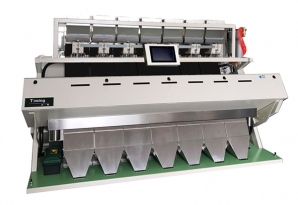
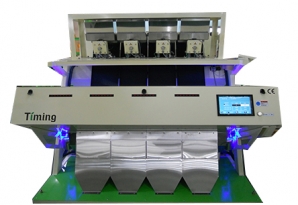
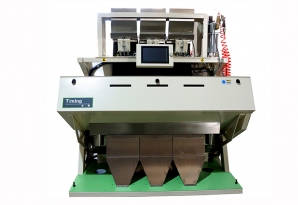
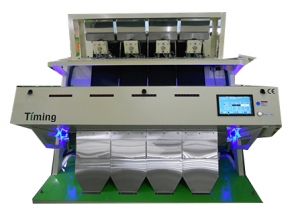
Moldy spots exist on moldy grain particles. Some mold spots are small with subtle color differences. Mixed in sound grains, they are hard to remove stably by manual sorting and will downgrade final products. Sorting moldy particles with a grain color sorter is not simply boosting recognition sensitivity. Instead, a complete solution including pre-treatment, material calibration, parameter tuning, graded sorting, reject re-sorting and routine maintenance shall be implemented to balance mold removal efficiency and good grain carry-over rate, suitable for soybeans, mung beans, red beans, millet, sorghum, kidney beans and other miscellaneous grains.
Raw material pre-treatment is the foundation for the grain color sorter to identify moldy particles stably. Moldy grains are often covered with dust, husk fragments and soil. Such attachments interfere with optical acquisition, and faint light-colored mold spots are easily covered by dust, resulting in missed detection. Before feeding into the grain color sorter, raw materials go through cleaner screens, destoners and air separators to remove large impurities, broken grains and floating dust and reduce powder content. Meanwhile, raw material moisture shall be controlled. Excessive moisture causes abnormal surface reflection, which may be misjudged as mold spots by the camera and lead to massive good grain rejection. Moist grains need air-drying. Batches with wide particle size range shall be pre-classified and screened to separate large and small grains for separate sorting, avoiding overlapping and shielding between particles which may be misidentified as moldy grains. Stable pre-treatment reduces recognition interference and enables the lens to capture mold features clearly.
Sample collection and model calibration establish the recognition benchmark for moldy particles. Mold manifestations vary by grain type: mold spots on dark grains are mostly off-white or light brown, while those on light grains are usually dark brown or blackish-brown, including many dotted partial mold spots. Heavily moldy grains with full discoloration shall be distinguished from grains with slight local mold spots. During commissioning, samples of sound grains, lightly moldy grains and heavily moldy grains from the same batch are collected and imported into the system for feature learning to build a dedicated sorting model. Operators clarify sorting criteria to distinguish rejectable moldy grains, acceptable grains with minor color deviation and insect-damaged broken grains, avoiding ambiguous standards. For grains supplied from rotating origins with changing base color, samples shall be recollected to update the model; direct reuse of old models tends to cause missed mold or false rejection of sound grains. Multi-channel grain color sorters can capture color and texture features simultaneously. Compared with color-only recognition, texture recognition performs better on small dotted mold spots.
Feeder, chute and light source calibration ensures stable material imaging for the grain color sorter. Material conveying directly affects imaging quality. The vibration amplitude of the feeder is adjusted to disperse particles evenly and make them slide downward in single file without overlapping, jumping or clustering. Chutes shall be kept clean and smooth. Wear and powder accumulation change the falling posture of particles and destabilize imaging angles. Light sources and background plates inside the sorting chamber are calibrated regularly for uniform and stable brightness to avoid local reflection and shadow. Background plates must stay clean; dust and mold stains alter the imaging reference. Lenses and protective glass are key inspection points. Dust reduces clarity, so a timed blowing procedure is added for mold sorting to clean the observation window. For spherical and oval grains with variable falling postures, multi-angle image acquisition can be activated to detect mold spots on all sides and prevent undetected mold facing away from the camera.
Fine tuning of sorting parameters controls mold removal rate and carry-over ratio. Sensitivity, feed flow, valve delay and blow duration are core adjustable parameters for mold sorting. Too low sensitivity fails to detect tiny mold spots and causes missed mold; too high sensitivity misjudges natural color marks and hilum of sound grains, sending plenty of good grains to the reject outlet. Adjustments shall be minor. After each sensitivity change, continuous sampling and inspection are carried out on good grain and reject outlets. Feed flow shall not be increased blindly. Overcrowded particles at high flow leave insufficient time for recognition and air-blow response and raise the risk of missed mold. Valve timing shall match particle falling speed; advanced or delayed blowing leads to failed rejection or collateral good grain loss. Records are kept during commissioning, and confirmed parameters are saved as recipes for direct recall in subsequent production of the same grain type. For stringent product requirements, two-stage sorting can be adopted: the first rough stage removes heavily moldy grains, and the second fine stage captures mild mold spots for higher sorting purity.
Reject re-sorting design reduces good grain loss. When the grain color sorter separates moldy particles, rejects often contain wrapped sound grains. Direct discarding increases raw material loss. A re-sorting process can be configured: collected rejects are fed back to the color sorter for secondary sorting with reduced sensitivity to recover sound grains. Rejects from secondary sorting are collected separately as nonconforming products. Note that repeated circulation is not suitable for batches with severe mold contamination. Conveying repeatedly spreads mold debris and contaminates clean grains. For high-mold batches, priority shall be given to lowering feed speed and optimizing primary sorting parameters rather than relying on repeated re-sorting. Material flow shall be isolated with separate bins for good grains, re-sorting materials and rejects to prevent cross-contamination.
In-process patrol and sampling inspection form a closed quality loop. After production starts, samples are taken regularly from the good grain outlet for manual inspection and comparison against standard samples to check residual moldy grains. Meanwhile, the mold proportion in rejects is checked to verify whether the carry-over ratio is within the preset range. Equipment operation is monitored for feeding interruption, chute blockage and valve air leakage or clogging. If mold grains persist in finished products, check lens dust and raw material color shift first, then recheck the sorting model and sensitivity. Recipes, batch information and inspection records are handed over between shifts, and parameters for the same batch are not altered arbitrarily. In case of sharp changes in workshop temperature and humidity or rising dust, lens blowing frequency is increased, and background recalibration is performed when necessary.
Routine equipment maintenance sustains long-term stable mold sorting performance. Dust from moldy grains carries mold spores and adheres and breeds more easily than ordinary grain dust. After shutdown, hoppers, chutes, sorting chambers and valve assemblies shall be cleaned promptly to remove residual powder and mold debris and avoid cross-contamination of subsequent batches. Valves are inspected periodically; fouled valve ports cause weak or offset blowing and inaccurate rejection of moldy grains. Degraded light beads are replaced in time to maintain uniform illumination and recognition capability. Full cleaning and dry storage are required before long-term shutdown to inhibit mold residue growth. Complete machine cleaning is mandatory before switching grain varieties to prevent residual moldy particles from mixing into new batches.
Several common pitfalls in mold sorting should be avoided: do not simply raise sensitivity to solve missed mold, which causes heavy good grain loss; do not skip pre-treatment before feeding, as dust interference is the most frequent cause of sorting failure; do not apply one set of parameters to grains from all origins and with all moisture levels. Moldy particle sorting by grain color sorter relies on coordinated processes including pre-cleaning and moisture control, sample modeling, stable imaging, fine parameter adjustment, reject re-sorting and regular cleaning and maintenance. It controls raw material loss while meeting finished mold specifications and adapts to regular quality control in grain processing. Processors can set corresponding rejection grades according to sales standards to distinguish sorting requirements for ordinary commercial grains and high-standard export or deep-food-processing raw materials.